
One engineer.
The whole system.
I design the database, build the app and run the servers. My software tracks work on factory floors, in warehouses and on jobsites, and through opsandgo I run other teams' live apps on AWS.
Six systems that replaced the spreadsheet.
Built for cabinet makers, wholesalers and installation crews, plus Eventonite, my own ticketing product. I scoped, wrote and deployed every one of them myself.

CL Logistics Manager
Every order, pallet and apartment in one place, from the supplier to the installed cabinet.

CL Factory Manager
Every station gets a screen built for its job. Managers see the whole floor, live.

M-Pakk Manager
One system from vendor purchase to customer delivery. Webshop stock and invoices take care of themselves.

CL Jobsite Installer
A phone app for installers that keeps working in the basement and syncs when the signal returns.

GzoneAI
Reads messy project descriptions and returns parts, dimensions and quantities. An hour of data entry now takes seconds.
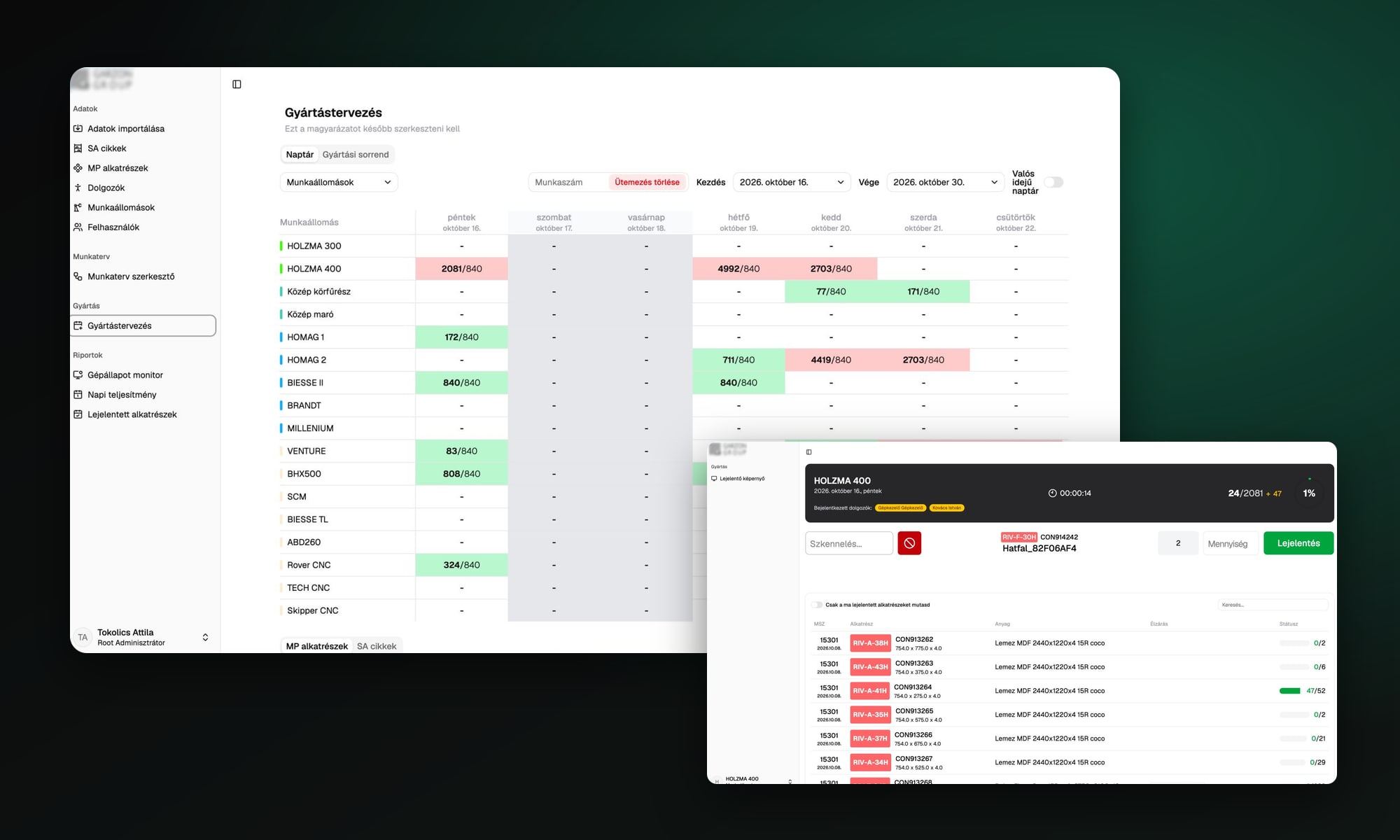
GZone Factory
Plans every part's route through the machines and shows each workstation's load per day. Operators report finished work at the machine.
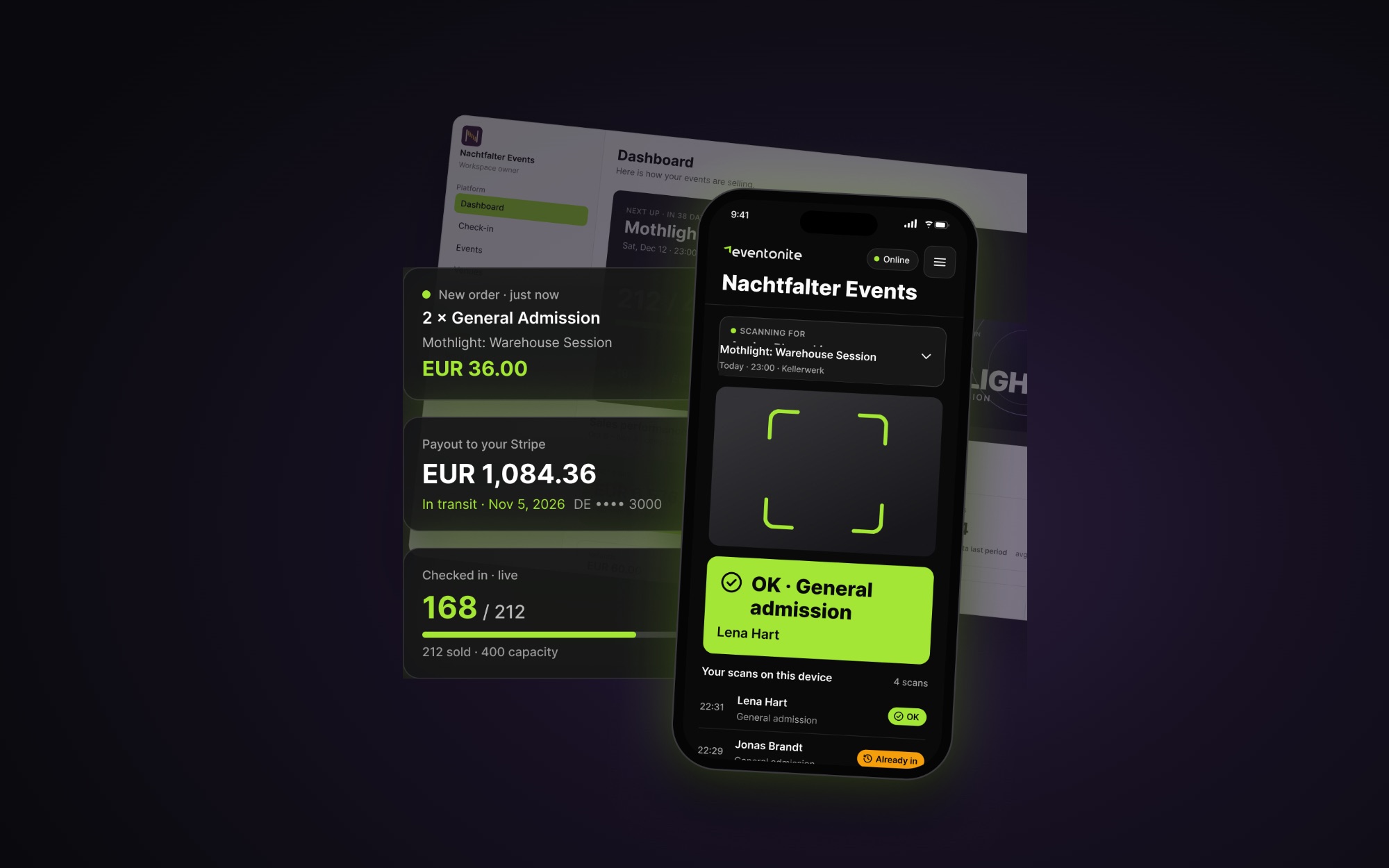
Eventonite
Ticketing for club nights and festivals. One flat monthly fee, and ticket money goes straight to the organizer's Stripe account.
What changed after the software shipped.
Bulk imports, labels and reports took hours of spreadsheet work.
They run as background jobs in minutes and email the team when done.
An hour of manual data entry to turn a project description into parts.
A background job finishes it in seconds.
FTP import failures went unnoticed for hours.
An email alert goes out as soon as the sync goes stale.
Truck loading had no enforced sign-off.
The driver scans, the manager approves. Unsigned shipments are gone.
Project managers phoned the site for status updates.
They check live status and photo galleries from a laptop.
What I can build for you.
ERP and order management
Orders, purchasing, inventory, invoicing and role-based dashboards in one system.
M-Pakk Manager →Factory-floor tools
Station screens, barcode scanning, Zebra label printing and live job tracking.
CL Factory Manager →Warehouse and logistics
Multi-warehouse stock, pick lists, transfers and approval workflows with a full audit trail.
CL Logistics Manager →Offline field apps
Installable web apps that save on the device first and sync when the connection returns.
CL Jobsite Installer →AI data extraction
Turn unstructured text into structured records, with an alert when a job finishes or fails.
GzoneAI →SaaS products
Paid products with checkout, team roles, multiple workspaces and translated customer emails.
Eventonite →You work with the person who writes the code.
I know the factory floor
I was a furniture manufacturing engineer before I wrote software. You won't spend the first month explaining what a work order is.
Nothing gets lost between teams
Database, frontend, infrastructure and deployment sit with one person. No handoffs, no account managers, no agency markup.
You talk to me
I take on one or two clients at a time, so when something breaks you reach the person who can fix it.
Monthly retainer
I stay on as your technical partner. New features, maintenance and fixes from someone who already knows your system.
Fixed project
One system or module, with an agreed timeline and clear deliverables. Right for a new build or a major feature.
How a project runs.
Learn the operation
I start with how the work really moves through your business, before any code.
Agree the scope
We pin down one system or module, a timeline and clear deliverables.
Build and deploy
Database, app, infrastructure and CI/CD, all from the same person.
Keep it running
A monthly retainer covers maintenance, fixes and new features once it's live.
The tools I ship with.
React, Next.js, Vite, Ant Design, React Query, Redux
Node.js, REST APIs, BullMQ + Redis, CASL
PostgreSQL, MySQL, MongoDB, IndexedDB, Sequelize
AWS S3, SES, Secrets Manager, Parameter Store, PM2, CI/CD
Stripe, Monday.com, Shoprenter, Billingo, OpenAI, Zebra printers

From the factory floor to production code.
I'm Attila. I started as a process engineer in furniture manufacturing and taught myself to code to fix problems I saw firsthand on the floor.
Production flow, subcontractors and jobsite coordination are things I've lived with for years, so the data model follows how your business really runs.
Alongside client work I build my own products: opsandgo, managed AWS hosting for React, Next.js and Node.js apps, and Eventonite, a flat-fee ticketing platform. I build them the way I build client systems, from the database to the servers.
opsandgo
Managed AWS hosting for React, Next.js and Node.js apps. The show must go on.
I founded opsandgo for teams that have a live app and no one to run it. The app moves to a new AWS account in the client's name, and opsandgo deploys, backs up, monitors and patches it for a fixed monthly fee.
// Onboarding finishes only after the access role in the
// client's AWS account is verified. One conditional UPDATE:
// no read-then-write, so two clicks can't race.
export const postClientActivate = async (req, res, next) => {
  const { id } = req.params;

  const [updated] = await db
    .update(Client)
    .set({ status: "active" })
    .where(and(
      eq(Client.id, id),
      eq(Client.status, "onboarding"),
      isNotNull(Client.portalVerifiedAt),
    ))
    .returning({ id: Client.id, status: Client.status });

  if (!updated) {
    return res
      .status(409)
      .json({ message: "Verify the portal access first." });
}Kickoff call
The client opens a new AWS account on a 15-minute call. The card, the bill and the root user stay theirs.
Account setup
opsandgo builds the server, a database with automatic backups, DNS and narrowly scoped access roles from scratch.
Go-live
Deploys run from the client's GitHub repo or a second git remote, with automatic rollback if a release fails.
After go-live
Daily backups, regular patches and restore tests, and a monthly report. The portal shows app status and the AWS cost.